
Description
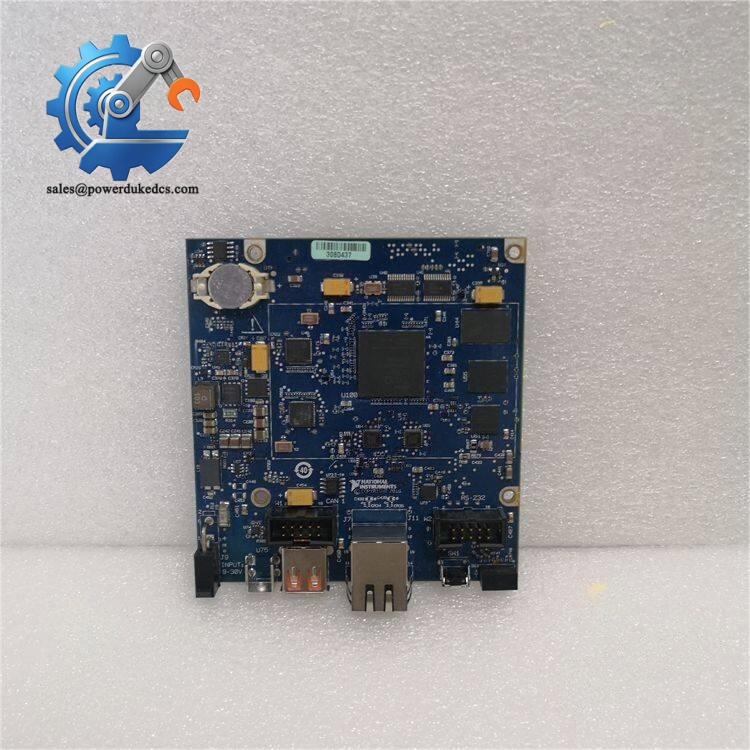
- NI sbRIO-9607 | Direct Replacement sbRIO OEM Embedded Control Hardware
Product Core Brief
- Model: sbRIO-9607
- Brand: National Instruments (NI)
- Series: CompactRIO Single-Board RIO (sbRIO) OEM Platform
- Core Function: Embedded real-time controller combining ARM processor and user-reconfigurable FPGA for high-speed control & data acquisition
- Type: Single-Board RIO Embedded Controller
- Key Specs: Xilinx Zynq-7020 SoC | NI Linux Real-Time | 96 × 3.3V FPGA DIO | RMC Expansion Connector
⚠️ Declared obsolete by NI, limited stock availability
Condition: New Surplus, not refurbished
Key Technical Specifications
| Parameter | Specification |
|---|---|
| Full Part Number | sbRIO-9607 (783816-01 Dev Kit / 783816-02 OEM Unit) |
| SoC Chip | Xilinx Zynq-7020 All Programmable SoC |
| Processor | Dual-Core ARM Cortex-A9 @ 667 MHz |
| FPGA Logic | 85,000 logic cells, 220 DSP blocks |
| Operating System | NI Linux Real-Time (32-bit) |
| Memory | 512 MB DDR3 DRAM, 512 MB NAND Flash |
| Digital I/O | 96 channels 3.3 V bidirectional FPGA-connected DIO |
| Expansion Interface | High-speed RIO Mezzanine Card (RMC) Connector |
| Onboard Communications | Gigabit Ethernet, CAN 2.0, RS232 Serial, USB 2.0 |
| Power Input | 9 V DC – 30 V DC wide range supply |
| Operating Temperature | -40 ℃ ~ +85 ℃ |
| Storage Temperature | -40 ℃ ~ +85 ℃ |
| Software Support | LabVIEW, LabVIEW Real-Time Module, LabVIEW FPGA Module |
| OEM Status | Obsolete legacy embedded control hardware |
NI sbRIO-9607
Product Introduction
Application Scenarios & Pain Points
- Power Electronics Converters & Inverters
Used for bidirectional DC/DC, AC/DC converter control. Hardware-timed FPGA loops execute fast switching algorithms and protection logic.
- Automated Test Equipment (ATE)
Semiconductor and component validation benches requiring synchronized multi-channel signal acquisition and stimulus output.
- Custom Motion Control Systems
Multi-axis positioning platforms with encoder feedback, high-speed pulse generation and inter-axis safety interlocks.
- Renewable Energy Test Stands
Battery cyclers, grid emulator control and power hardware-in-the-loop (PHIL) simulation platforms.
- Industrial OEM Machinery
Specialized automation equipment with embedded control, where designers integrate the sbRIO board directly inside machine enclosures.
A renewable energy research lab’s power hardware-in-the-loop test bench stopped operating after an sbRIO-9607 suffered power rail damage. The FPGA stopped loading application bitfiles, and all real-time control loops went offline.
Compatibility & Replacement Matrix
Notes: Verify LabVIEW software version compatibility. Backup existing FPGA bitfile, startup application and network configuration before hardware swap.
sbRIO-9627: Form factor similar, not pin-compatible on RMC interface; requires carrier board redesign and software revalidation.
sbRIO-9608 / newer sbRIO generations: Not drop-in replacement; platform migration requires full control system redevelopment.
Quality Control Process
- Inbound Inspection
Check serial number and board labeling. Full visual PCB inspection to detect corrosion, scratch damage, component rework or thermal discoloration.
- ESD Controlled Handling
All testing operations performed on anti-static workbench with ESD wrist strap to prevent damage to FPGA and peripheral circuits.
- Bench Functional Test
Mount controller on test carrier. Complete power-on self-test, Ethernet/CAN/USB communication verification, DIO channel testing, and successful deployment of LabVIEW RT & FPGA bitfile. A formal test report is generated upon passing.
- Configuration Documentation
Capture hardware photos and record MAC address for customer reference.
- Electrical Continuity Test
Check power rail integrity and rule out internal short-circuit risks.
- Final QC & Packaging
QC inspector signs off after all test items pass. Board sealed inside anti-static bag, wrapped with bubble film and packed into export carton, attached with QC Passed label. Test photos or videos can be provided upon request.
Field Replacement Pitfall Guide
-
LabVIEW Software Version Compatibility
Older sbRIO firmware cannot boot with newer LabVIEW runtimes, and vice versa.
Advice: Record the current LabVIEW development version, RT target version and FPGA bitfile revision before replacement. I have witnessed engineers install latest runtime, causing boot loop and multiple hours of debugging.
-
RMC Mezzanine Connector Pinout Differences
Custom carrier boards designed for earlier sbRIO models are not guaranteed compatible with sbRIO-9607.
Warning: Do not hot-plug the RMC connector under power. Improper insertion can damage onboard power circuits.
-
Power Supply Range & Noise
The board accepts 9–30 V DC, but large voltage transients without filtering can trigger unexpected resets. Add input LC filtering for harsh industrial environments.
-
Electrostatic Discharge Risk
FPGA and high-speed interface circuits are sensitive to static.
Real lesson: A technician handled the bare board without ESD protection, resulting in damaged Ethernet PHY after power-up. The unit became unrecoverable.
-
Application & Bitfile Backup
If you fail to export the startup RT executable and FPGA bitfile before replacing hardware, you will need to recompile and redeploy all control code.
-
Post-installation Validation
After replacement, run continuous soak testing for minimum 6 hours. Verify all communication links, hardware-timed DIO and closed-loop control performance before returning equipment to operation.



 Start Chat