

Description
- ABB PSTX370-690-70 | Full Motor Protection & Dynamic Braking Soft Starter Module
Product Core Brief
- Model: PSTX370-690-70
- Brand: ABB
- Series: PSTX Advanced Soft Starter Series
- Core Function: Deliver smooth motor acceleration and deceleration to eliminate inrush current and mechanical shock
- Type: 3-phase intelligent AC motor soft starter
- Key Specs: 370 A rated operational current; 208–690 V main voltage; 100–250 V AC control supply
- Condition: New Original surplus, factory tested
- Built-in Design: Integrated bypass contactor for low heat loss and energy saving
Product Introduction
Key Technical Specifications
- Full Model: PSTX370-690-70
- Rated Operational Current: 370 A (640 A inside-delta connection)
- Main Circuit Voltage: 208–690 V AC, 50/60 Hz
- Control Supply Voltage: 100–250 V AC, 50/60 Hz
- Control Mode: Voltage ramp, torque ramp, current limit start
- Built-in Component: Integrated bypass contactor
- Protection Functions: Overload, phase loss, current unbalance, over/under voltage, stall protection
- Advanced Features: Dynamic braking, slow-speed jog, auto phase sequence detection, event logging
- Display & Operation: Detachable IP66 graphical keypad, 17-language support
- PCB Treatment: Conformal coated board for dust and corrosion resistance
- Operating Temperature: -20 °C ~ +60 °C
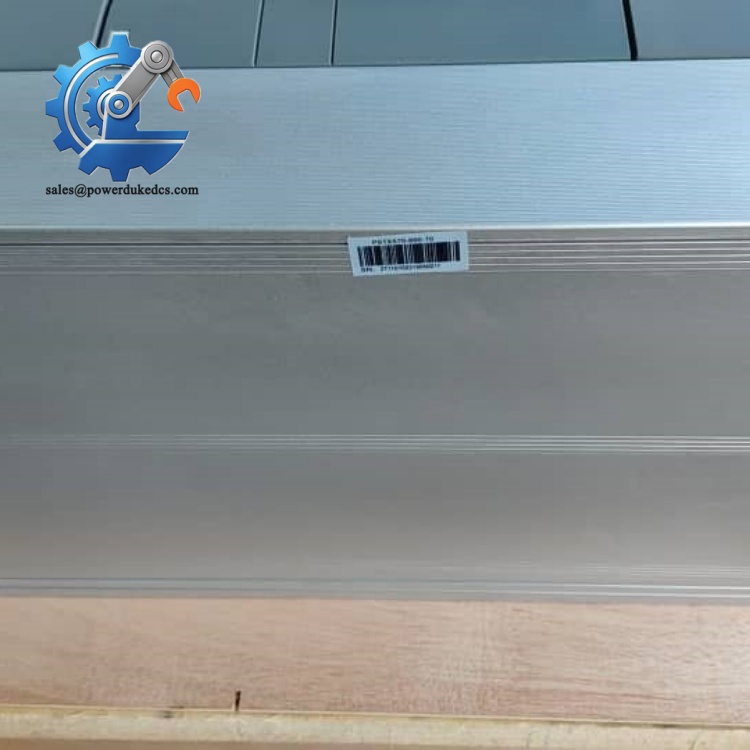
ABB PSTX370-690-70
Installation & Configuration Guide
Pre-Installation Preparation (15 mins)
Perform full lockout-tagout procedures. Disconnect main power and control power. Confirm motor and mechanical loads are in static standby status. Wait 5 minutes for residual charge discharge.
Insulated screwdrivers, Fluke multimeter, torque wrench, label tapes, mobile phone for wiring recording.
Record original motor startup parameters and wiring sequence. Confirm motor rated current matches the soft starter capacity. Reserve 20% current margin for long-term load fluctuation.
Old Device Removal (12 mins)
Step 2: Disconnect low-voltage control wires first, then isolate high-power main circuit cables.
Step 3: Loosen mounting bolts and remove the old soft starter steadily.
Step 4: Clean cabinet mounting surface and check cable insulation for aging or damage.
New PSTX370-690-70 Installation (18 mins)
Step 2: Select in-line or inside-delta wiring according to on-site motor cabinet layout.
Step 3: Reconnect main circuit and control cables strictly following recorded wiring photos.
Step 4: Torque power terminals to standard specification to avoid overheating under heavy load.
Step 5: Install external keypad (if needed) and confirm communication connection.
Wiring mode matches site design ✅
Terminal torque standard and uniform ✅
Ventilation channels unblocked ✅
No short-circuit risk in main circuit ✅
Power-On & Commissioning (30 mins)
Step 1: Switch on control power, check keypad display and self-test status. No fault codes should appear.
Step 2: Input motor nameplate parameters: rated current, rated voltage, startup time and protection thresholds.
Step 3: Set startup mode: choose torque ramp for heavy-load startup or voltage ramp for fan/pump equipment.
Step 4: Execute no-load startup test, observe current change curve and motor operating status.
Step 5: Carry out full-load operation test, verify soft stop performance and protection logic.
Step 6: Save final parameter settings and record commissioning data in maintenance logs.
Quality Inspection Process
- Incoming Visual Inspection
Check housing integrity, terminal flatness and complete model marking. Confirm no scratch, deformation or disassembly traces.
- Power-On Self-Test
Supply standard control voltage to verify keypad display, system self-check and indicator status.
- Function Simulation Test
Simulate startup and stop logic to confirm soft start curve output and bypass switching action.
- Protection Function Verification
Test phase loss, overload and current unbalance protection response to ensure normal trigger logic.
- Electrical Performance Test
Use professional instruments to test insulation resistance and circuit continuity. All data meets ABB factory standards.
- Data Archiving & Packaging
Record serial number and test data for traceability. Seal with anti-static bag and bubble wrap, attach QC pass label before delivery.
Field Replacement Pitfall Guide
In-line and delta connection carry different current ratings. Using in-line mode for high-current motors will trigger frequent overload alarms. Match wiring method with actual load demand.
Blindly using default parameters causes insufficient startup torque or excessive current limitation. Every motor needs parameter calibration based on load characteristics.
This high-current model generates obvious heat during operation. Blocked ventilation leads to overheating trips under continuous full-load operation.
The 100–250 V wide-range control power cannot withstand overvoltage surge. Unstable grid voltage without surge protection damages internal control boards.
Auto phase sequence detection works only after correct wiring. Wrong phase sequence causes startup failure and motor reverse rotation risk.
Loose power terminals produce high contact resistance, leading to local overheating and terminal burnout during long-term operation.
Frequently Asked Questions (FAQ)
-
What is the maximum applicable motor current for this model?
It reaches 370 A under standard in-line connection, and supports up to 640 A with inside-delta wiring. It fits most medium and large industrial AC motors.
-
Does PSTX370-690-70 need external bypass contactor?
No. It adopts integrated bypass design. The internal contactor automatically closes after startup to reduce heat loss, saving cabinet space and installation cost.
-
Can it realize braking and jogging control?
Yes. It supports dynamic braking and forward/reverse slow-speed jog functions, suitable for positioning and heavy-load stop scenarios.
-
Is conformal coating available for this unit?
All circuit boards are factory-coated, adapting to dusty, humid and slightly corrosive industrial environments.
-
What causes soft start failure in most field cases?
From on-site experience, 80% of failures come from incorrect parameter settings and mechanical load jamming, rather than device hardware defects.
-
What warranty is provided?
All stocked units offer 12-month warranty. Damage from wrong wiring, overvoltage surge and man-made modification is excluded.
-
Can the keypad be installed outside the cabinet?
Yes. The detachable IP66 keypad supports external installation for convenient on-site operation and parameter modification.


 Start Chat