

Description
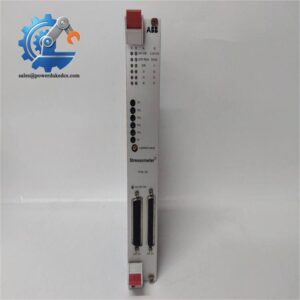
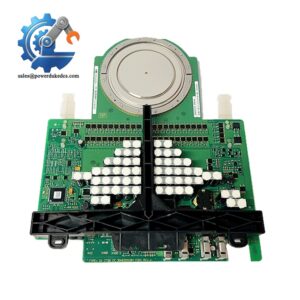
- ABB SDCS-PIN48-SD | Industrial DC Drive Pulse Board for Rolling Mill & Metal Processing
Product Core Brief
- Model: SDCS-PIN48-SD
- Brand: ABB
- Series: SDCS DCS800 DC Drive Series
- Core Function: Transmit isolated firing pulses to thyristor power bridges
- Type: Pulse Transformer Trigger Board
- Key Specs: 6 independent pulse channels; 2000 VAC isolation; 48-pin control bus interface
Condition: New Surplus, not refurbished
⚠️ This part has been phased out by ABB, limited stock available
Product Introduction
Key Technical Specifications
| Parameter | Specification |
|---|---|
| Part Number | SDCS-PIN48-SD |
| Compatible Master Board | SDCS-CON-4 |
| Pulse Channels | 6 independent channels |
| Isolation Rating | 2000 VAC (control circuit ↔ power circuit) |
| Operating Supply | 24 V DC from internal drive auxiliary power |
| Static Power Consumption | ≤ 2 W |
| Pulse Synchronization Precision | ≤ 0.5 μs |
| Operating Temperature | -20 ℃ ~ +55 ℃ |
| Protection Class | IP20 (cabinet installation only) |
| Net Weight | 0.328 kg |
| Dimension (W×H×D) | 175 mm × 115 mm × 45 mm |
| Mounting Method | Slot installation inside DCS800 electronic tray |
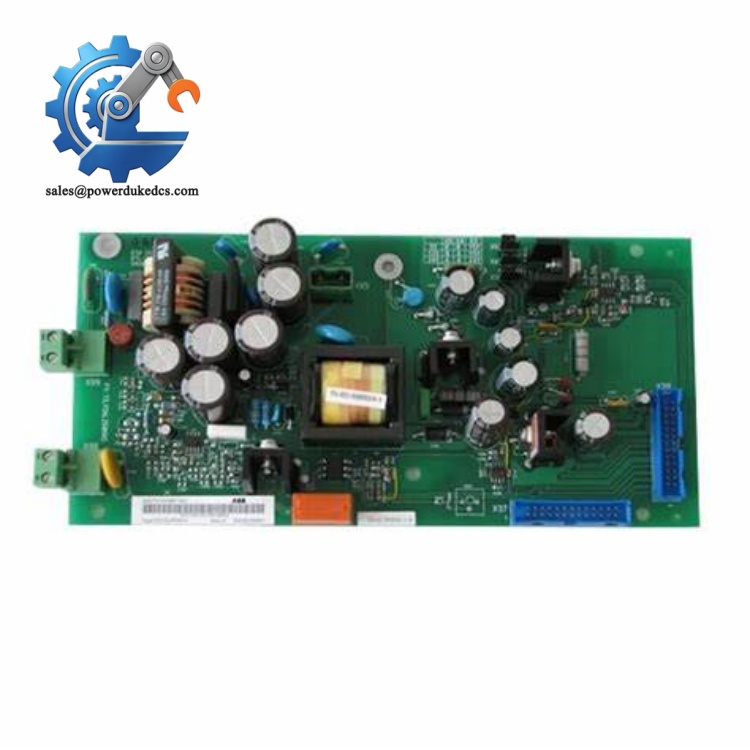
ABB SDCS-PIN48-SD
Installation & Configuration Guide
Phase 1: Pre-Installation (Estimated 10 min)
- Arrange planned downtime and stop all linked motor loads
- Shut down the complete drive unit, disconnect main AC power
- Wait at least 5 minutes to discharge DC-link capacitors
- Do not skip static protection procedures
- ESD wrist strap + anti-static mat
- PH1 cross screwdriver
- Digital multimeter
- Mobile phone (for photographing original wiring and connectors)
- Contact cleaner for pin maintenance
- Take clear photos of the 48-pin bus connector and pulse wiring terminals
- Record all wiring sequences of thyristor gate and cathode cables
- Save the drive parameter set via Drive Composer
Phase 2: Old Board Removal (Estimated 12 min)
- Open the drive cabinet and access the electronic tray
- Unplug the upper 48-pin control bus connector carefully
- Disconnect all six pulse output cables connected to thyristors one by one
- Loosen 3–4 M3 fixing screws holding the board
- Slide the board straight out from the tray slot, avoid twisting the PCB
- Inspect the tray backplane pins for bending, oxidation or contamination
Phase 3: New Board Installation (Estimated 15 min)
- Wear ESD wrist strap before taking SDCS-PIN48-SD out of anti-static packaging
- Visual inspection: check PCB for scratch, burnt trace or loose transformers
- Align the board with tray guide rails, insert horizontally
- Tighten fixing screws with proper torque; do not over-tighten
- Reconnect 48-pin control bus connector until fully locked
- Restore pulse cables strictly following photos taken before disassembly
- Double-check all terminal connections for loose strands
[ ] No leftover wires or tools inside the cabinet
[ ] All pulse cables are firmly terminated
[ ] No short circuits between gate and cathode terminals
[ ] Board is fully seated without tilt
Phase 4: Power-On & Commissioning (Estimated 20 min)
- Close cabinet doors, switch on auxiliary control power first
- Observe drive status LED; confirm no immediate fault codes
- Launch Drive Composer and check drive communication
- Run low-speed no-load test for DC motor
- Monitor armature current balance of three phases
- Operate motor under partial load for 30 minutes continuously
- Confirm no F501, F502 pulse-related alarms
- F501 Pulse Fault: Check loose pulse wiring or poor contact of 48-pin connector
- Unbalanced DC current: Verify pulse cable length consistency and shielding grounding
- Random tripping: Check whether shielding layers are grounded on single end only
Frequently Asked Questions (FAQ)
-
Can SDCS-PIN48-SD directly replace the standard SDCS-PIN48?
It depends on the converter topology. The SD version features adjusted pulse transformer parameters for specific DCS800 variants. Cross-check the original drive nameplate before swap; direct replacement is not guaranteed without verification.
-
Is hot-swap supported for SDCS-PIN48-SD?
No. Hot removal of the 48-pin bus will cause pulse disorder, which may lead to thyristor breakdown and permanent damage to power modules. Full power shutdown is mandatory for replacement.
-
Which control boards can work with SDCS-PIN48-SD?
Only SDCS-CON-4. Older SDCS-CON-2 and SDCS-CON-3 use different pin definitions on the bus interface, hardware compatibility does not exist.
-
What are typical failure signs of this pulse board?
Common symptoms include frequent F501 pulse fault, obvious three-phase current deviation, motor vibration under low speed, and visible burnt marks on pulse transformers.
-
How long is the warranty for supplied SDCS-PIN48-SD?
We offer a 12-month warranty under normal industrial operation. Warranty excludes damage caused by ESD, incorrect wiring, overvoltage surge or improper installation.
-
Can I repair a faulty SDCS-PIN48-SD locally?
Field repair is not recommended. Pulse transformer insulation damage is hard to detect visually. Repaired boards often show intermittent faults under load, risking unexpected production downtime.
-
What wiring rules apply to thyristor pulse cables?
Use twisted shielded cables. Connect shield ground only at the drive side. Avoid routing pulse wires parallel to high-power AC cables to reduce electromagnetic interference.



 Start Chat